
Case Study: Creative Rubric Development
Role: Digital Marketing Specialist / Creative Strategist at Steelcase
Skills: Creative operations, content strategy, channel optimization, systems building, workflow design
Team: Creative, Brand, Paid Media, Digital Marketing
Timeline: 4 weeks
Overview
With a small creative team and growing need for multi-channels assets, we needed a scalable way to repurpose visuals and messaging across platforms with different requirements. I built a Creative Rubric + Content Calendar to optimize limited creative resources, improve cross-channel consistency, and streamine planning.
Solution
I created a two-part framework:
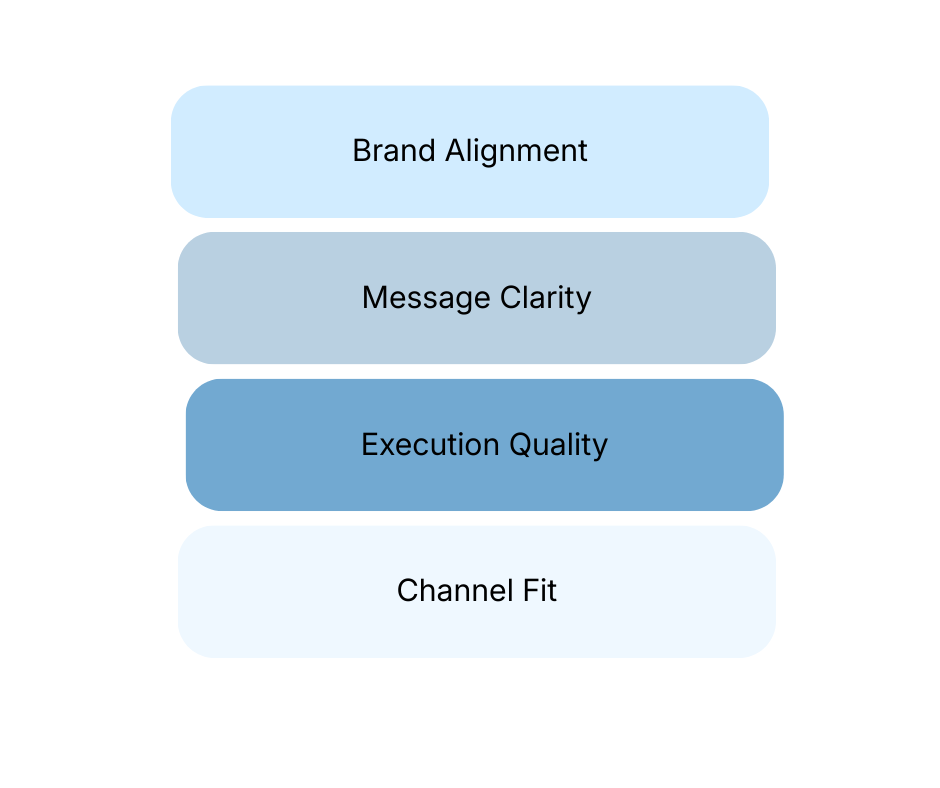
Creative Quality + Adaptation Rubric
A guide defining:
Core messaging (what stays consistent everywhere)
Channel specific adjustments (format, tone, hierarchy)
Brand consistency requirements
Technical requirements (ratios, safe text zones, readability)
Monthly Cross-Channel Content Calendar
A planning tool outling
What assets needed to be produced each month
For which channels
In what formats
And at what frequency
Example:
Meta > 3 new static images every month
Google On-Demand > 1 new video per month
This calendar aligned creative output with channel performance rhythms.
The Challenge
Limited creative bandwidth
High-volume needs across Meta, Google, YouTube, Pinterest, email, landing pages, and organic channels
Different platforms required different formats and messaging styles
No system existed for planning or adapting assets across channels
Teams struggled to know what to produce and how often
Core issue: We needed a flexible system that maximized the impact of each asset while minimizing production strain.
Implementation
Introduced both tools to creative, brand, and media teams
Built a lightweight workflow for repurposing assets efficiently
Used the calendar to inform monthly briefs and workload forecasting
Linked rubric criteria to performance data to refine output over time
Reduced confusion about what to produce and when
My role: Owned the creation, documentation, rollout, and optimization of both systems.
Research + Inputs
To build a rubric that was both strategic and practical, I gathered insights from:
Channel performance data (what worked where and why)
Platform best practices
Inventory of existing assets + gaps
Creative team capacity
Brand guidelines + messaging frameworks
Paid media pacing + refresh requirements
Insight: We weren’t lacking creative ideas– we lacked structure for how to break one idea into multiple channel-ready variations
Outcomes
Reduced production strain through smarter asset reuse
Clearer planning with predictable monthly creative needs
More consistent performance across channels
Higher-quality cross-channel variations thanks to rubric guidance
Fewer revision cycles and more alignment between creative + media
Foundation for a scalable creative ops system